
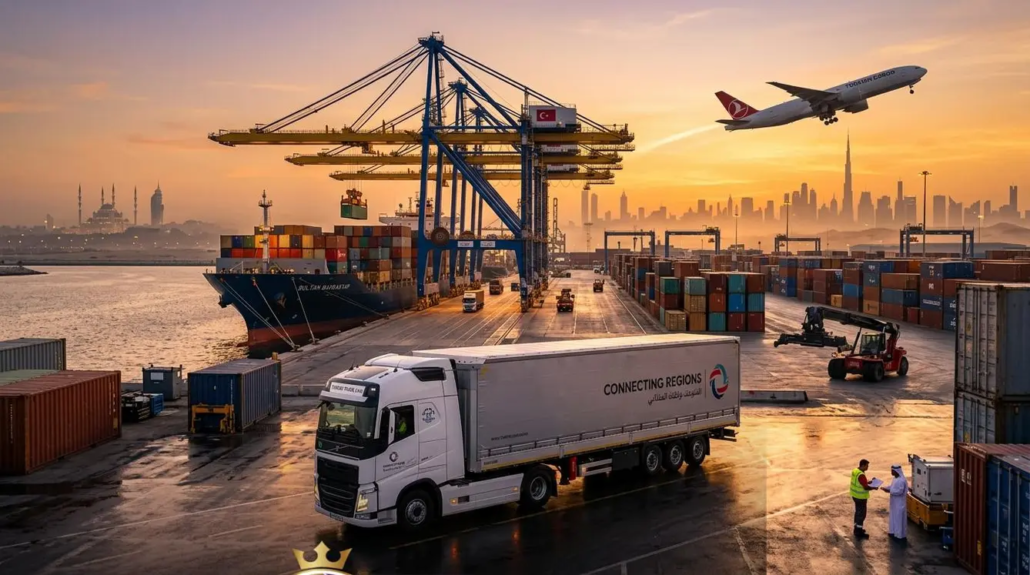
Supply Chain Excellence: Turkey to Middle East
Supply Chain Excellence: Integrating Turkey and Middle East Logistics
The modern global economy thrives on the seamless movement of goods across borders, and perhaps nowhere is this more evident than in the corridor connecting Turkey to the Middle East. As a transcontinental bridge, Turkey serves as a vital hub for international trade, while the United Arab Emirates, Oman, and Iran act as critical gateways to the Persian Gulf and beyond. Supply chain excellence in this region requires more than just moving boxes; it demands a sophisticated understanding of local regulations, multimodal transport networks, and the ability to navigate complex customs environments in cities like Dubai, Istanbul, and Tehran.
Achieving efficiency in Turkey to Middle East logistics involves leveraging high-capacity infrastructure. From the bustling ports of Ambarli in Istanbul to the massive logistics zones in Dubai and Abu Dhabi, businesses rely on a steady flow of raw materials, textiles, electronics, and industrial equipment. This article explores the intricacies of freight forwarding, the strategic importance of various shipping routes, and how professional logistics management ensures that commerce remains uninterrupted across these diverse markets.
The Strategic Role of a Logistics Company in Istanbul
Istanbul is not just a city; it is a global logistics powerhouse. Positioned at the intersection of Europe and Asia, a logistics company in Istanbul manages the convergence of overland routes from the EU and maritime routes from the Black Sea. For businesses looking to export to the UAE or Oman, Istanbul provides the primary consolidation point for cargo. The city’s airports, particularly Istanbul Airport (IST), have become central hubs for rapid air freight, allowing high-value goods to reach Dubai or Muscat in a matter of hours.
Beyond air transport, the land routes originating from Turkey are essential for regional trade. Trucks departing from industrial zones in Turkey traverse through diverse terrains to reach the southern borders. This connectivity is a cornerstone for Turkey to UAE freight, where mixed loads of textiles and machinery are frequently transported. The expertise required to manage these long-haul journeys involves real-time tracking, temperature-controlled environments for perishables, and a deep knowledge of the transit countries’ documentation requirements.
Cargo Services in Dubai: The Heart of Gulf Trade
The United Arab Emirates represents the final destination and the primary redistribution center for the majority of cargo entering the Middle East. When discussing cargo services in Dubai, we are looking at one of the world’s most advanced logistics ecosystems. Dubai’s unique position, supported by the Jebel Ali Port and Dubai World Central (DWC), allows it to offer unparalleled sea-to-air transit times. This is vital for businesses that need to move products quickly from Turkey or Iran to African or East Asian markets.
In addition to Dubai, Abu Dhabi and Sharjah have developed significant logistical capabilities. Abu Dhabi’s Khalifa Port is a major entry point for heavy industrial cargo, while Sharjah’s airport serves as a specialized hub for low-cost air freight and regional distribution. For companies operating in these areas, partnering with a shipping company in Dubai is essential to manage the final-mile delivery and ensure that goods are cleared through customs without delay. The integration of technology in UAE customs has simplified the process, but the human element—local knowledge and physical presence—remains irreplaceable.
Door to Door Cargo UAE: Simplifying the Last Mile
One of the most sought-after services in the region is door to door cargo UAE. This model removes the burden of logistics from the business owner or individual. In a door-to-door setup, the service provider handles everything from the initial pickup in Istanbul or Shiraz to the final delivery at a warehouse in Dubai or a residence in Muscat. This comprehensive approach is particularly popular for e-commerce businesses and individuals relocating across the Middle East. By using Turkey to UAE freight routes, specialized providers can guarantee delivery timelines that were previously impossible for small-scale shipments.
Navigating the Iran to UAE Shipping Corridor
The trade relationship between Iran and the UAE is centuries old, yet it continues to evolve with modern logistics technology. Shipping from Shiraz to UAE and managing cargo from Tehran to Dubai are two of the most active routes in the region. These routes often involve a combination of land transport to major Iranian ports like Bandar Abbas, followed by sea transit to Port Rashid or Sharjah’s Khalid Port. Because of the geopolitical complexities, having a partner who understands the specific compliance and documentation for these routes is non-negotiable.
For many businesses, cargo from Tehran to Dubai represents a lifeline for consumer goods and industrial components. The proximity of the two countries allows for frequent sailings and short transit times, making it a highly cost-effective corridor. However, the efficiency of this route depends heavily on the “Sajil” or manifest systems and the speed of the dhow or container ship unloading process in the UAE. Advanced freight forwarding UAE services now offer integrated solutions that manage these variables, providing transparency to the end-user.
Oman Logistics: The Growing Importance of Muscat
Muscat has emerged as a critical node in the Middle East supply chain, offering an alternative entry point to the Gulf that bypasses the Strait of Hormuz. Cargo services Muscat Oman are increasingly utilized by international firms looking to diversify their risk. The connectivity between Dubai and Muscat is particularly strong, with daily land transport and frequent air connections. As Oman invests in its “Vision 2040,” the expansion of ports in Sohar and Salalah has bolstered its position as a logistics leader.
The Dubai to Muscat cargo route is a primary example of regional integration. Using efficient land transportation, goods can move between the UAE and Oman within a single day. This is essential for the retail and construction sectors, where just-in-time delivery is required. The border crossings at Hatta and Al Wajaja are some of the busiest in the region, requiring logistics providers to have a firm grip on the customs union rules of the GCC to avoid bottlenecks.
Multimodal Excellence: Air Freight and Sea Freight UAE
To achieve supply chain excellence, a logistics provider must be proficient in both air and sea transport. Air freight and sea freight UAE services cater to different needs based on urgency and budget. Sea freight is the backbone of bulk trade, with Jebel Ali handling millions of TEUs (Twenty-foot Equivalent Units) annually. For large-scale shipments from Turkey or Iran, sea freight UAE offers the most economical solution, particularly for goods that are not time-sensitive, such as furniture, heavy machinery, or construction materials.
On the other hand, air freight is the preferred choice for high-value or perishable items. Electronics from Istanbul or fresh produce from Iran rely on the cold-chain capabilities of Emirates SkyCargo or Etihad Cargo. Asadi Express Cargo specializes in managing these diverse requirements, ensuring that whether a shipment travels by sea or air, it remains under a single point of accountability. This multimodal capability allows businesses to pivot their strategy based on market demands or seasonal fluctuations.
Technical Challenges in Middle East Logistics
Operating in the Middle East involves navigating a diverse landscape of regulations. Each country, from the UAE to Turkey, has its own set of customs duties, prohibited items lists, and documentation standards. Supply chain excellence is often defined by the ability to pre-clear cargo and minimize time spent in bonded warehouses. This requires a digital-first approach, where electronic data interchange (EDI) is used to send shipping manifests to authorities before the vessel or aircraft even departs.
Another challenge is the extreme climate of the region. During the summer months, temperatures in Dubai and Muscat can exceed 50 degrees Celsius. For logistics companies, this means that “supply chain excellence” must include robust thermal protection for cargo. Whether it is pharmaceuticals or sensitive electronics, maintaining the integrity of the product through specialized packaging and climate-controlled transport is a hallmark of a reliable shipping company that understands the local environment.
The Role of Asadi Express Cargo in Regional Trade
In the complex web of Middle East trade, Asadi Express Cargo has established itself as a pivotal player. By offering tailored solutions that connect Istanbul to the heart of the Gulf, the company addresses the specific needs of both commercial enterprises and private shippers. Their expertise in the Iran-UAE-Oman triangle allows them to provide competitive rates and reliable schedules, which are essential for businesses operating in today’s fast-paced market. By focusing on customer service and operational transparency, they help bridge the gap between different regulatory environments.
The Future of Logistics: Tech and Sustainability
The logistics sector in the Middle East is undergoing a massive transformation driven by Artificial Intelligence and a push for sustainability. In Dubai, autonomous trucks and drone deliveries are being tested to solve the last-mile challenge. In Turkey, the expansion of rail networks is aimed at reducing the carbon footprint of long-haul land transport. Companies that embrace these technologies will lead the next generation of supply chain excellence.
For the average business, this means better visibility. Real-time tracking is no longer a luxury; it is a standard expectation. Being able to see exactly where a shipment is—whether it is on a truck outside of Ankara or in a warehouse in Sharjah—gives businesses the confidence to manage their inventory more effectively. Furthermore, the push for “green logistics” is leading to the adoption of more efficient routing algorithms and the use of eco-friendly packaging materials across the Turkey-Middle East corridor.
Personal and Business Use Cases
Logistics excellence serves various stakeholders. For an e-commerce entrepreneur in Istanbul, it means being able to sell products to customers in Abu Dhabi with the same ease as selling to someone in Ankara. For a construction firm in Muscat, it means receiving specialized steel components from Turkey exactly when they are needed on-site. Even for individuals, such as an expat moving from Tehran to Dubai, professional cargo services provide the peace of mind that personal belongings will arrive safely and legally.
Asadi Express Cargo understands these varied needs, providing a bridge that facilitates not just commerce, but also personal connections across borders. Their ability to handle small parcels alongside large industrial shipments makes them a versatile partner in the regional economy. By offering global logistics solutions that are grounded in local expertise, they ensure that the complexities of international shipping do not hinder the ambitions of their clients.
Frequently Asked Questions (FAQ)
What is the average transit time for cargo from Turkey to Dubai?
Transit times vary depending on the mode of transport. Air freight typically takes 1 to 3 days, including customs clearance. Sea freight from Turkish ports like Ambarli or Izmir to Jebel Ali usually takes between 15 to 25 days, depending on the shipping line and transshipment points.
How are customs duties calculated in the UAE?
In the UAE, customs duties are generally calculated as a percentage of the CIF (Cost, Insurance, and Freight) value of the goods. For most items, the standard rate is 5%, though some products may be exempt or subject to higher “sin taxes” (like tobacco or energy drinks). It is advisable to consult with a freight forwarding UAE expert to get an accurate estimate.
Can I ship personal household goods from Iran to Oman?
Yes, shipping personal household goods between Iran and Oman is common. However, it requires specific documentation, including a packing list, copies of passports, and sometimes a residence permit in the destination country. Professional cargo services in Muscat Oman can help manage this process to ensure a smooth transition.
What items are restricted for shipping to the Middle East?
While specific rules vary by country, generally restricted items include alcohol, pork products, religious materials that conflict with Islamic values, and certain types of telecommunications equipment. Always check with your shipping company in Dubai before sending specialized or unusual cargo.
Conclusion: Choosing the Right Partner for Growth
Supply chain excellence between Turkey and the Middle East is the result of a perfectly synchronized dance between infrastructure, technology, and local expertise. Whether you are navigating the busy streets of Istanbul or the high-tech logistics zones of Dubai, the key to success lies in choosing a partner who understands the nuances of the region. From managing cargo from Tehran to Dubai to facilitating Turkey to UAE freight, the right logistics provider turns obstacles into opportunities.
For businesses and individuals looking to expand their reach or move their assets across these dynamic markets, Asadi Express Cargo offers the reliability and expertise needed to thrive. Don’t let the complexities of international shipping slow you down. Contact us today to receive a customized quote and experience the pinnacle of Middle East logistics. Let us handle the details so you can focus on what matters most—your growth and success in the heart of the world’s most vibrant trade corridor.


Leave a Reply
Want to join the discussion?Feel free to contribute!