









14 November 2026; this guide does not replace a current product-specific import and tariff review.
Order from a specification, not a photograph
For a bulk purchase, record fibre percentages, construction, usable width, weight per square metre, finishing and intended use. Agree metres and weight per roll and acceptable variation. Retain an approved sample and colour reference. Shade variation or shrinkage after processing may be more consequential than a small saving in the purchase price.
Is every fabric eligible for import into Iran?
There is no reliable blanket answer. Check the exact Iranian eight-digit classification, registration status and applicable approvals for the current shipment. This article is not a live Iranian trade-system clearance result. Fibre composition, construction and coatings or finishing help identify the product. A tariff code alone does not establish permission to import.
Build traceable shipment documents
Prepare invoices and packing lists so each roll or batch can be matched to its description, quantity, length and net/gross weight. Origin and transport documents must fit the actual procedure. Establish any testing or standard requirements tied to the intended use before dispatch. Purchase in Türkiye does not by itself establish Turkish manufacturing origin.
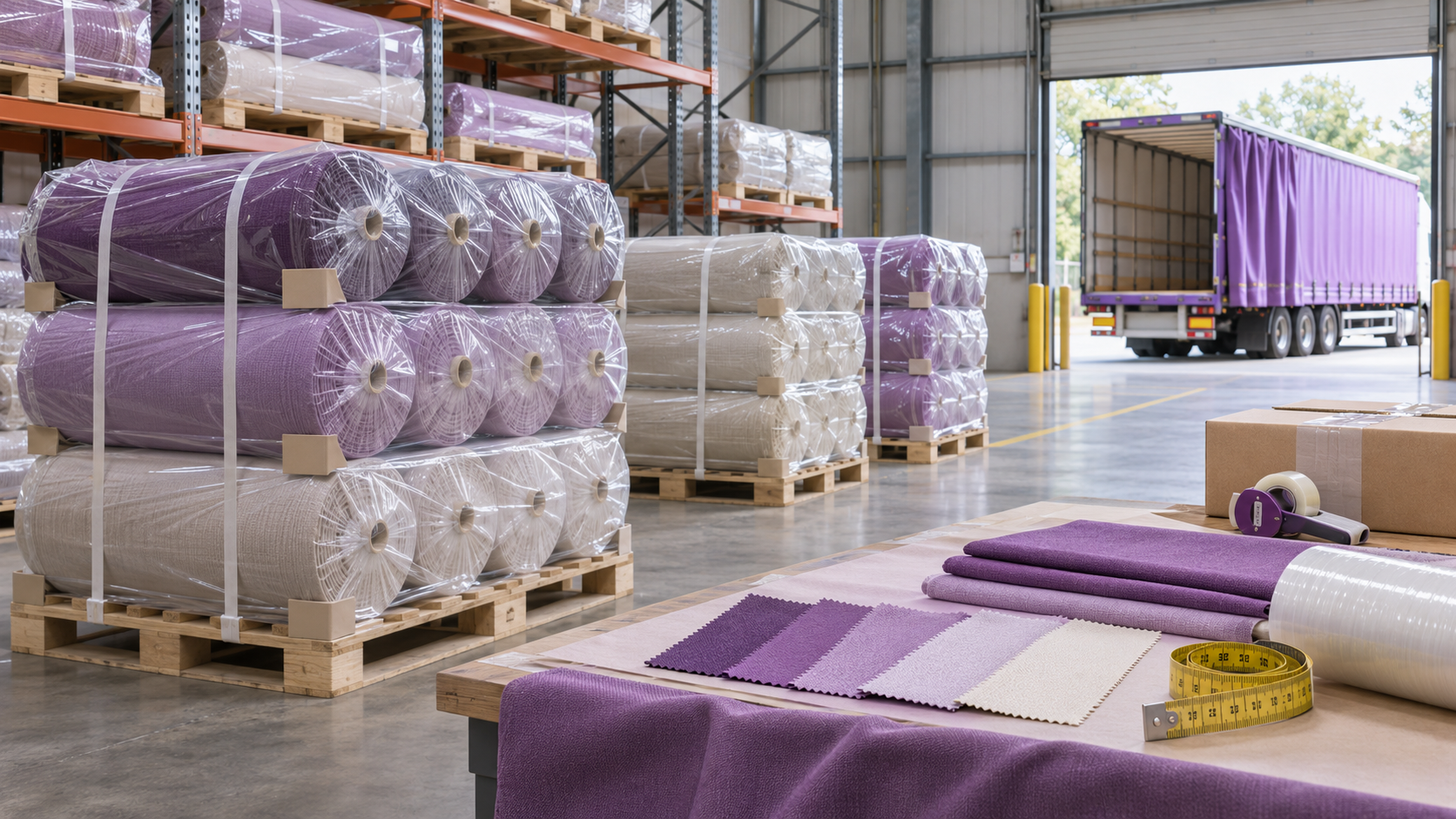
Keep rolls clean, dry and identifiable
Use protective wrapping appropriate to the textile, protect exposed edges and label rolls individually. Do not hand over wet packages. Avoid loading pressure that deforms rolls and incompatible cargo that may leak or transfer odour. Agree stacking arrangements with the supplier and carrier rather than assuming that every fabric roll can take a load on top.
Groupage or a full vehicle?
Groupage may be worth assessing for a few rolls or pallets. Compare handling frequency, protection and the arrangements for combining several suppliers. A full vehicle may offer more control over stowage for larger consignments, but is not automatically cheaper. A useful quotation needs collection and delivery locations, packed dimensions, gross weight, stackability and readiness date.
Calculate the delivered cost
Separate the metre price from collection in Türkiye, packaging, international freight, agreed insurance and customs-related costs. Metres cannot be converted reliably into kilograms without width and unit-weight information. Clearance costs cannot be calculated accurately from the generic label “Turkish fabric”; the actual product code, valuation and documents are needed.
Common questions
Can several purchase orders travel together? Keep order and roll identification intact. Do fabric and finished clothing share a classification? Do not assume so. Does freight include customs charges? Only when the written quotation explicitly includes them; request inclusions and exclusions.
Ask Asadi Express to assess the shipment
Provide packing photographs, fibre and construction details, roll or pallet count, length, gross weight, dimensions and collection/delivery addresses. Use the quick-shipment portal or quotation form. Cargo acceptance and import eligibility should be reviewed before final booking.
Related guides
Related Iran–Türkiye guide (Persian)
Related Iran–Türkiye guide (Persian)
Sources and review date
Türkiye Ministry of Trade — Iran import and foreign exchange framework
World Customs Organization — HS FAQ
International Trade Administration — Common Export Documents
Türkiye Ministry of Trade — Origin of goods
Related Türkiye–Iran cargo guides
Buying and shipping industrial machinery from Türkiye to Iran
Buying and shipping machinery spare parts from Türkiye to Iran
Shipping Plastic Raw Materials and Masterbatch from Türkiye to Iran
Routes


