






Shipping Machinery: Turkey to Oman Guide
The trade bridge between Turkey and the Sultanate of Oman has seen exponential growth over the last decade, particularly in the industrial and construction sectors. As Oman continues to diversify its economy under Vision 2040, the demand for high-quality Turkish machinery—ranging from textile equipment and food processing units to heavy-duty construction machinery—has surged. Navigating the complexities of international transit requires a deep understanding of routes, regulations, and logistics providers. This Shipping Machinery: Turkey to Oman Guide aims to provide businesses and individuals with a comprehensive roadmap for moving heavy equipment across borders efficiently and safely.
Transporting machinery is not as straightforward as shipping standard consumer goods. It involves meticulous planning, specialized packing, and a robust network of carriers that understand the Middle Eastern landscape. Whether you are shipping from the industrial heart of Istanbul to the bustling ports of Muscat or Salalah, the process demands a strategic approach to minimize costs and avoid delays at customs. In the following sections, we will delve into the modes of transport, regional hubs, and the essential steps to ensure your cargo reaches its destination in pristine condition.
The Strategic Role of Turkey and Oman in Middle East Logistics
Turkey stands as a primary manufacturing hub for the region, offering a unique blend of European quality and competitive pricing. A logistics company in Istanbul serves as the critical starting point for many of these shipments, coordinating the movement of oversized loads from factories in Kocaeli, Bursa, or Ankara toward the southern ports or land borders. The geographical advantage of Turkey allows for multiple exit points, making it a versatile origin for heavy machinery exports.
On the receiving end, Oman offers a stable and modern infrastructure. Ports like Sohar and Duqm have become central to regional trade, often acting as alternatives to the traditional hubs in the United Arab Emirates. However, for many Omani businesses, the logistics chain often involves transshipment through the UAE. This is where freight forwarding UAE experts play a pivotal role, managing the transition of goods from deep-sea vessels to smaller coastal ships or land-based trailers for final delivery to Muscat. Understanding this interconnected web is vital for anyone following this Shipping Machinery: Turkey to Oman Guide.
Furthermore, the regional logistics landscape is heavily influenced by the proximity of other major players. For instance, many shipments destined for the southern Middle East might interact with routes involving cargo from Tehran to Dubai or shipping from Shiraz to UAE, especially when multimodal transport is utilized to bypass certain maritime bottlenecks. Recognizing these overlapping corridors helps in choosing the most resilient shipping route.
Modes of Transport for Heavy Machinery
When it comes to moving heavy equipment, there are three primary modes to consider: sea freight, land transport, and air freight. Each has its own set of advantages depending on the urgency, budget, and physical dimensions of the machinery.
Sea Freight: The Backbone of Industrial Shipping
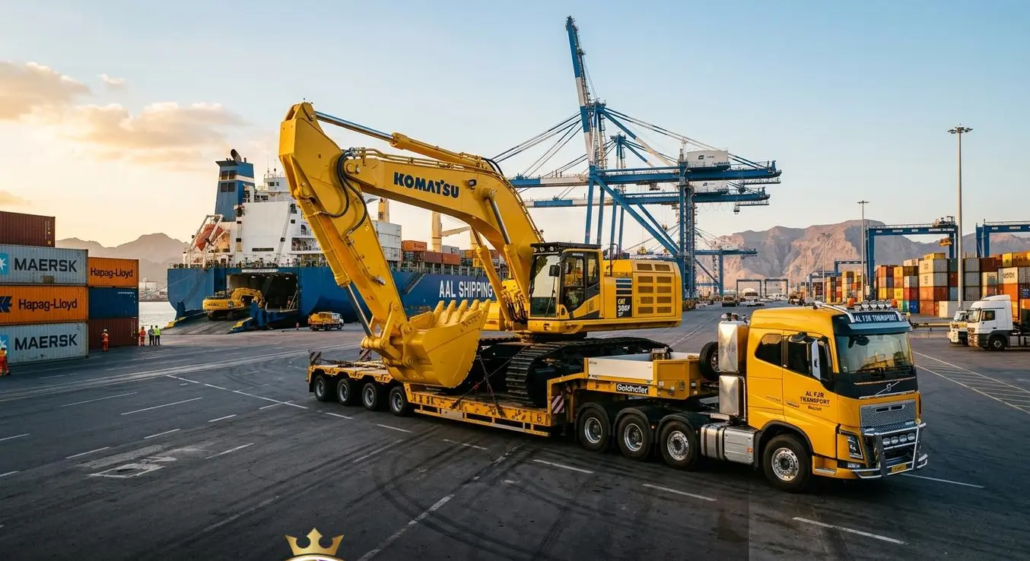
For large-scale industrial projects, ocean freight forwarding is the most common and cost-effective method. Machinery that can fit into standard containers is shipped via FCL (Full Container Load), while oversized items like excavators or industrial boilers are handled as Breakbulk or via Roll-on/Roll-off (RoRo) vessels. Asadi Express Cargo provides specialized oversight for these types of shipments, ensuring that heavy loads are secured correctly to prevent shifting during the long voyage from the Mediterranean or Marmara Sea to the Gulf of Oman.
Land Transport and Multimodal Solutions
While Turkey and Oman are not directly connected by a single land bridge that bypasses all water bodies, land transport remains crucial for the “first-mile” and “last-mile” delivery. Many logistics providers utilize a combination of trucks and ferries. Land transportation experts often move machinery through the GCC road network once the cargo reaches a primary entry point like Dubai or Abu Dhabi. The journey from the UAE borders to Muscat is a well-traveled route for heavy-duty trailers carrying industrial equipment.
Air Freight for Time-Critical Components
While not typical for entire assembly lines due to cost, air freight and sea freight UAE services are often used in tandem. Critical spare parts or smaller high-tech machinery may be flown into Muscat International Airport to prevent costly downtime at a construction site or factory. This hybrid approach ensures that while the bulk of the shipment moves by sea, the project remains on schedule with air-shipped essentials.
Key Regional Hubs: From Istanbul to Muscat
In the world of Middle Eastern logistics, certain cities act as the “gears” that keep the machine moving. Understanding the local capabilities of these cities is essential for a successful shipping strategy.
- Istanbul: The primary consolidation point for Turkish exports. It hosts some of the world’s most advanced container terminals.
- Dubai: The logistics capital of the world. Utilizing cargo services in Dubai allows shippers to tap into world-class warehousing and re-export facilities.
- Abu Dhabi and Sharjah: These UAE emirates provide vital support for overflow cargo and specialized heavy-lift equipment that may be required before the final leg to Oman.
- Muscat: The final destination for most machinery shipments in Oman, boasting modern customs clearance facilities that have been streamlined for industrial imports.
- Tehran and Shiraz: Often overlooked in Turkish-Omani trade, these cities are vital for overland routes that transit through Iran, offering a shorter geographical path for certain types of non-sanctioned industrial goods.
Working with a reputable shipping company in Dubai can simplify the process of moving goods across these varied jurisdictions. They can manage the “door to door cargo UAE” to Oman transition, which is often the most complex part of the journey due to differing customs protocols between the emirates and the Sultanate.
Challenges in Shipping Machinery: Turkey to Oman Guide Perspective
One of the biggest hurdles in shipping machinery is the sheer diversity of the cargo. A CNC machine requires climate-controlled or at least moisture-protected packaging, whereas a bulldozer needs heavy-duty lashing and a RoRo platform. The Shipping Machinery: Turkey to Oman Guide emphasizes the importance of “pre-shipment inspections.” Ensuring the machinery is documented in its original state prevents disputes over damages that might occur during the long transit through the Suez Canal and around the Arabian Peninsula.
Another challenge is the regulatory environment. Each country has specific requirements for “Country of Origin” labeling and “Certificate of Conformity.” For machinery being shipped from Turkey, it is vital to have the documents attested by the relevant chambers of commerce and the Omani embassy. If the cargo transits through the UAE, a freight forwarding UAE specialist must ensure that the transit manifest is perfectly aligned with the final destination documents to avoid the cargo being “stuck” in Jebel Ali or Khalifa Port.
Asadi Express Cargo excels in managing these bureaucratic hurdles. By providing cargo and transportation services that cover the entire Turkey-GCC corridor, they minimize the risk of documentation errors that often plague international machinery shipping.
Real Use Cases: Logistics in Action
Case Study 1: Construction Equipment for Muscat Infrastructure
A Turkish contractor won a bid for a road expansion project in Muscat. They needed to move twenty heavy excavators and several asphalt pavers from Istanbul. The solution involved a RoRo vessel from Turkey to Dubai, followed by specialized low-loader trucks for the final leg to Oman. By utilizing cargo services Muscat Oman providers who specialize in heavy haulage, the contractor was able to get their fleet on-site within 25 days, significantly faster than a traditional breakbulk sea route.
Case Study 2: Food Processing Machinery for Omani Factories
An Omani food production company ordered a bespoke bottling line from a manufacturer in Izmir. Because the machinery was sensitive to vibrations and humidity, it was packed in custom-built wooden crates with VCI (Volatile Corrosion Inhibitor) protection. The shipment was sent via FCL sea freight. Upon arrival in the UAE, specialized logistics solutions were employed to ensure the delicate equipment was handled with air-ride suspension trucks for the road journey from Sharjah to the client’s facility in Muscat.
Case Study 3: E-commerce and Small-Scale Industrial Goods
With the rise of small-scale manufacturing, many entrepreneurs in Oman are importing smaller Turkish lathes and 3D printers. These often move through door to door cargo UAE services. The goods are consolidated in Istanbul, shipped to a warehouse in Dubai, and then delivered directly to the customer’s doorstep in Muscat or Salalah, providing a seamless “Amazon-like” experience for industrial equipment.
Essential Documentation and Customs Tips
To ensure your machinery doesn’t face delays, you must prepare a comprehensive document file. This typically includes:
1. Commercial Invoice
This must clearly state the value, description, and HS Code of the machinery. Accuracy here is vital for tax and duty calculations in Oman.
2. Packing List
A detailed breakdown of every crate, pallet, or loose item, including weights and dimensions. For machinery, this should also include the serial numbers.
3. Certificate of Origin
Confirming that the machinery was manufactured in Turkey. This is often required to benefit from any trade agreements between the GCC and Turkey.
4. Bill of Lading / Airway Bill
The contract of carriage between the shipper and the carrier. For sea freight, ensure you have the “Original” or a “Telex Release.”
Frequently Asked Questions
How long does it take to ship machinery from Turkey to Oman?
Standard sea freight usually takes between 20 to 30 days, depending on the port of call and transshipment schedules. If using a multimodal approach via the UAE, the time can be slightly reduced or extended based on road border clearance at Al Wajaja or Khatmat Malaha.
What is the most cost-effective way to ship heavy equipment?
For very heavy or oversized machinery, RoRo (Roll-on/Roll-off) is generally the most economical. For machinery that can be dismantled, shipping in a standard 40ft High Cube container is often the cheapest and safest method.
Do I need insurance for machinery shipping?
Absolutely. Machinery represents a high-value investment. Marine cargo insurance is essential to cover potential risks such as rough seas, handling accidents, or theft. Most reputable shipping company in Dubai partners will offer comprehensive insurance packages.
Can I track my shipment from Istanbul to Muscat?
Yes, modern logistics providers like Asadi Express Cargo offer real-time tracking for both sea and land legs of the journey. This allows businesses to plan their installation schedules accurately.
Are there restrictions on used machinery?
Oman has specific regulations regarding the age and condition of used machinery. It is often required that used equipment be clean of any soil or debris to pass environmental and health inspections. Always check the latest Omani customs circulars before shipping used gear.
Conclusion: Streamlining Your Industrial Supply Chain
Shipping machinery from Turkey to Oman is a sophisticated operation that sits at the heart of the Middle East’s industrial growth. By following this Shipping Machinery: Turkey to Oman Guide, you can navigate the complexities of international trade with confidence. Success lies in choosing the right mode of transport, understanding the strategic importance of hubs like Dubai and Istanbul, and ensuring your documentation is flawless. Whether you are moving a single piece of equipment or an entire factory, the right logistics partner makes all the difference.
For those looking for reliable, end-to-end solutions, Asadi Express Cargo stands ready to assist. From the initial pick-up in Turkey to the final delivery in Muscat, our team ensures your machinery is treated with the highest standards of safety and professionalism. Don’t let logistics be the bottleneck in your business growth. Contact a specialist today to secure your industrial supply chain and experience the best cargo services Muscat Oman has to offer.
More articles