








Importing Used Furniture from Turkey to Oman
Standing in a warehouse in the outskirts of Istanbul, you can hear the distinct sound of pallet jacks moving across concrete and the hiss of air-compression tools sealing wooden crates. A trader is busy inspecting a collection of velvet-upholstered chairs destined for a villa in Muscat. The sheer logistical complexity of moving household items across international borders is often underestimated by those who haven’t spent time on the ground. It requires more than just a truck; it demands an understanding of the specific customs regulations governing the import of used furniture from Turkey to Oman. This process involves careful documentation, an awareness of tax implications, and the right partner to navigate the transit routes through the Middle East.

Navigating Customs and Documentation for Used Furniture Imports
Moving personal effects or used goods across borders involves a different set of scrutiny compared to brand-new commercial cargo. Customs authorities in Oman are particularly strict regarding the condition and nature of items being brought into the country. You must provide a comprehensive packing list that details every single item in the shipment, down to the number of cushions or the specific wood type of a dining table. If you fail to declare these items accurately, you risk significant delays at the border or even the seizure of your property. Experience has taught me that customs officers in major ports often focus on the distinction between personal relocation and commercial resale. When your goods arrive, the documentation needs to prove that this is a private move, which often entails providing a copy of your residence permit or an attestation from your employer in Oman.
Once the cargo leaves the Turkish facility, it moves through various checkpoints that require verified paperwork to move forward. Ensuring your documentation is error-free remains the most critical step for a successful import. Beyond the inventory, you need the original bill of lading, the commercial invoice, and any applicable certificate of origin. Dealing with these requirements necessitates a professional land transportation approach to ensure that every vehicle crossing the border is fully accounted for with the correct permits. Missing a single signature on a clearance document in transit can lead to days of detention at the border crossing, which is a headache no one needs during a household move.
Optimizing the Logistics Route from Istanbul to Muscat
The geography between Turkey and Oman dictates the choice of transport mode. Most high-quality used furniture travels via a combination of road and sea freight. You might start your cargo in an Istanbul warehouse, loading it securely into a container that will eventually find its way onto a vessel sailing through the Persian Gulf. In my years arranging shipments between Tehran and Dubai, I have seen how the transit times can shift drastically based on the specific corridor chosen. If you move from Turkey through Iran and down to the southern ports, the handling of the goods becomes paramount to preventing damage to delicate furniture. Skilled labor is necessary for the initial packing, as the road vibration during long-distance transit can cause significant wear and tear if the furniture isn’t buffered with industrial-grade foam and wrap.
Deciding between full container loads and less-than-container-load shipping is another decision you need to make early on. If you are moving an entire four-bedroom villa, a forty-foot container offers the security of a sealed unit that remains untouched until it reaches the destination in Oman. Conversely, for smaller shipments, groupage is an economical choice, though it does mean your furniture will be handled during the consolidation process. Efficient cargo coordination ensures that regardless of the route, the goods are protected from the harsh regional climate, which can affect wood quality if moisture levels are not managed during the sea voyage or while waiting at the port.
Managing Specialized Household Moves
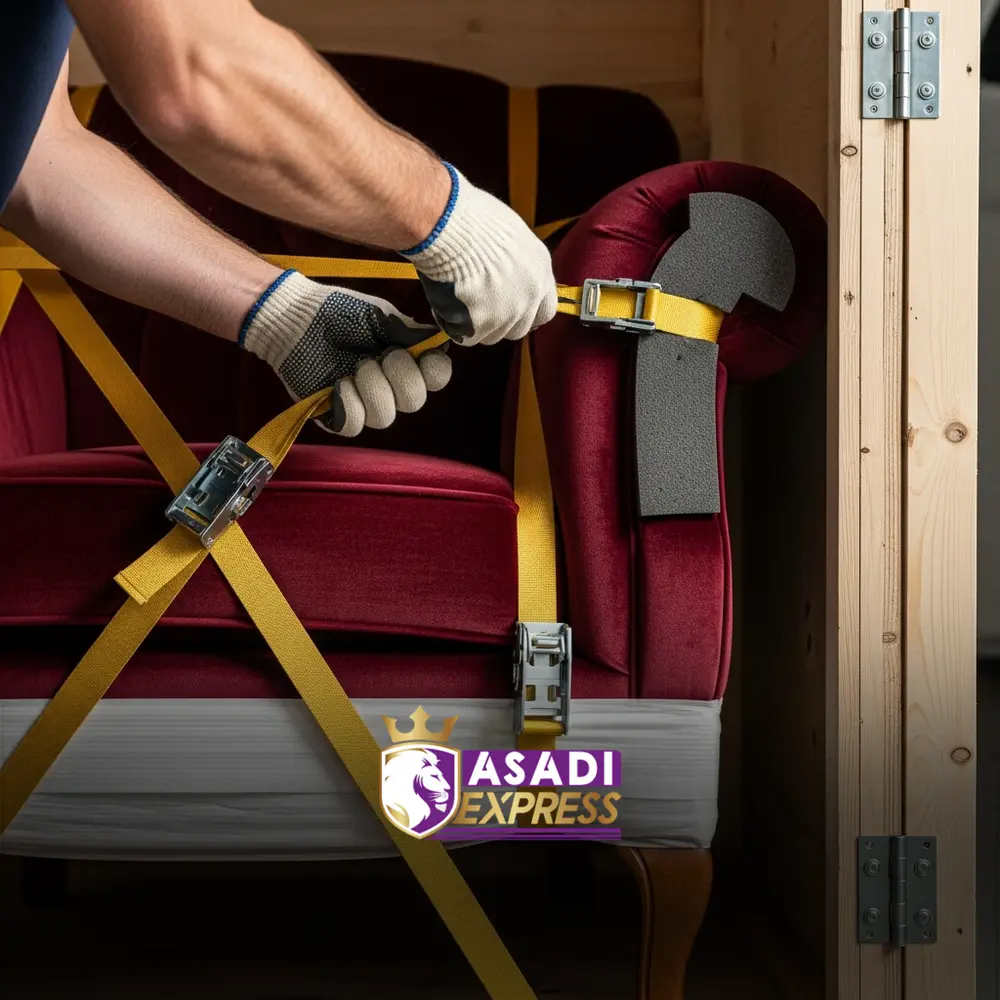
When you focus on the movement of used furniture, you are essentially managing an emotional and financial asset. These aren’t generic crates of plastic components; they are dining sets with sentimental value or heavy wardrobes that require specific lifting equipment. A reliable service provider like Asadi Express Cargo understands the nuances of handling antique or heavy wooden furniture. Their staff knows that the difference between a successful delivery and a damaged shipment often comes down to the quality of the internal crating. This is particularly relevant when navigating the specialized household moving protocols that govern these trans-border movements. You need a team that takes the time to bubble-wrap the legs of chairs and strap the larger cabinets to the side of the container so they do not shift during the turbulent transit on the road.
Why Proper Packing Matters for Long-Distance Transport
Consider the journey from Istanbul to Muscat as a gauntlet of different temperature zones. Wood expands in the heat of the Gulf and contracts in the cooler mountainous regions during the journey across the Middle East. If you do not account for these shifts, you may find your furniture pieces arriving with cracks or warped surfaces. Professional packing services include climate-aware wrapping, which is a step beyond simple cardboard and tape. Each item should be assessed based on its material sensitivity. For instance, leather sofas require breathability to prevent mold, while glass tabletops need custom-built wooden frames to survive the vibration of a long-haul truck. Taking these precautions is the difference between opening a container to a home-ready setup and opening it to broken pieces and a costly repair bill.
Choosing the Right Freight Forwarding Partner
The freight industry is filled with companies promising the moon, but very few have deep experience in the specific Turkey-Oman corridor. You want a firm that is well-versed in the regulatory environment of both nations. Asadi Express Cargo has established the necessary infrastructure to manage these complex logistical chains, ensuring that your furniture travels under a single point of responsibility. When selecting a partner, ask them about their handling process at the border and how they manage the handoff from road transport to port operations. Transparency in the billing process is also key; you should never be surprised by hidden handling fees or unexpected demurrage costs. A solid logistics provider with a proven company history acts as your representative during the clearance process, minimizing your need to be physically present at the customs office.
Logistics is never just about moving A to B. It is about understanding the local rules and the physical demands of the transport medium. Whether you are relocating your family or sending inherited furniture to a holiday home, the goal is the same: the safe arrival of your belongings. Proper preparation reduces stress and protects the value of your assets throughout the journey.
Frequently Asked Questions About Importing Furniture
What are the main taxes I should expect when importing used furniture into Oman? Generally, Oman imposes customs duties on personal imports unless you fall under specific categories like diplomatic status or returning citizens with appropriate documentation. You should prepare for an import tax calculated based on the declared value of the furniture, not just the shipping cost. It is wise to have your invoices ready for the customs officers to avoid arbitrary valuations which can be much higher than the actual market value of used goods.
How long does the average shipment take from Turkey to Oman? The transit time can vary from three to six weeks depending on the route and the mode of transport. A combination of road and sea is common, and delays often occur at border crossings during peak seasons or due to documentation backlogs. If you are in a rush, air freight is an option for high-value individual items, but for entire households, sea freight is the industry standard for cost-efficiency.
Can I pack the furniture myself to save on costs? You can, but most professional logistics providers advise against it for international moves. Using professional packers ensures that the furniture meets the international shipping standards required for insurance purposes. If you pack it yourself, you take the risk of damage, and the carrier’s insurance may not cover breakage because they cannot verify that the items were packed securely enough to withstand the journey.
Do I need to be in Oman to receive the cargo? You do not necessarily need to be there in person, but you must have a representative or a customs broker in Oman who can sign for the goods and process the entry paperwork. Make sure your power of attorney or authorization letters are in order before the shipment even departs from Turkey to prevent the furniture from being stuck in a port warehouse, where storage fees can accumulate daily. For comprehensive help, you can look at the main logistics portal to see how they manage these requirements for international clients.
Final Steps for Your Logistics Plan
Organizing a cross-border furniture shipment is a task that requires patience and a systematic approach. Before you book your transit, take a walk through your space and verify the dimensions of your largest pieces. Some items might require specialized lifting or custom crating that needs to be arranged weeks in advance. Once you have a clear inventory, reach out to a logistics specialist who knows the Turkey-Oman route intimately. They can provide an accurate quote that includes not just the shipping, but also the potential clearance hurdles you might encounter. Do not wait until your lease ends to start planning. Reach out for a site survey or a consultation on your specific cargo volume to ensure your furniture reaches your new address in the condition it left in.
More articles