









For fresh apples, book the truck after establishing import eligibility, not as a way to resolve it at the border. Harvested produce cannot wait indefinitely for incomplete paperwork. This guide helps align apple specifications, documents, handling conditions and the receiver’s acceptance hours. This research has not confirmed current admission of a specific Iranian apple consignment into Turkey. Obtain confirmation from the responsible authority before purchase and dispatch.
Register variety, packing, pallet count, weight, cities and the status of entry approval for an initial transport assessment. An enquiry is not a permit or confirmed booking.
Select the quick shipment request option in the portal. Phone verification is required to continue.
1. First establish product admission, not vehicle price
Turkey’s Agriculture Ministry lists certain apples, including Golden, Starking and Starkrimson, within its pest-risk-analysis framework. The list does not prove Iranian apples are approved. Confirm the relevant origin and product conditions before dispatch. Official pest-risk-analysis list.
The importer should ask the Turkish authority and customs representative: is this product and origin admissible; what phytosanitary certificate or additional declaration applies; is prior permission needed; and which entry point and control location suit the file? The exporter must separately check current Iranian export conditions. A seller’s general assurance or someone else’s previous shipment does not confirm your file.
2. Separate plant health from food safety
The official plant-health framework describes documentary, consignment-identity and pest checks. Turkish quarantine guidance. Food controls are a separate area whose applicability must be reviewed. Plant-origin food import guidance. Possessing one document does not guarantee the outcome of every control.
Do not treat fresh eating apples, nursery plants, propagation material, dried apples, juice and concentrate as equivalent. Specify variety, origin, use and product form. Avoid one universal permit list; the responsible specialist should identify documents and acceptance requirements under the applicable rules.
3. Tariffs and costs before the sale
We give no definitive rate without the precise GTİP, origin, value and declaration date. Duties and taxes differ from vehicle charges. Possible checks, waiting, holding facilities and unloading also need clear costing. Do not assume tariff preference or acceptance of origin evidence. Allocate delay costs, decisions following non-admission and quality-dispute handling in the contract.
4. Specifications must say more than “red apples”
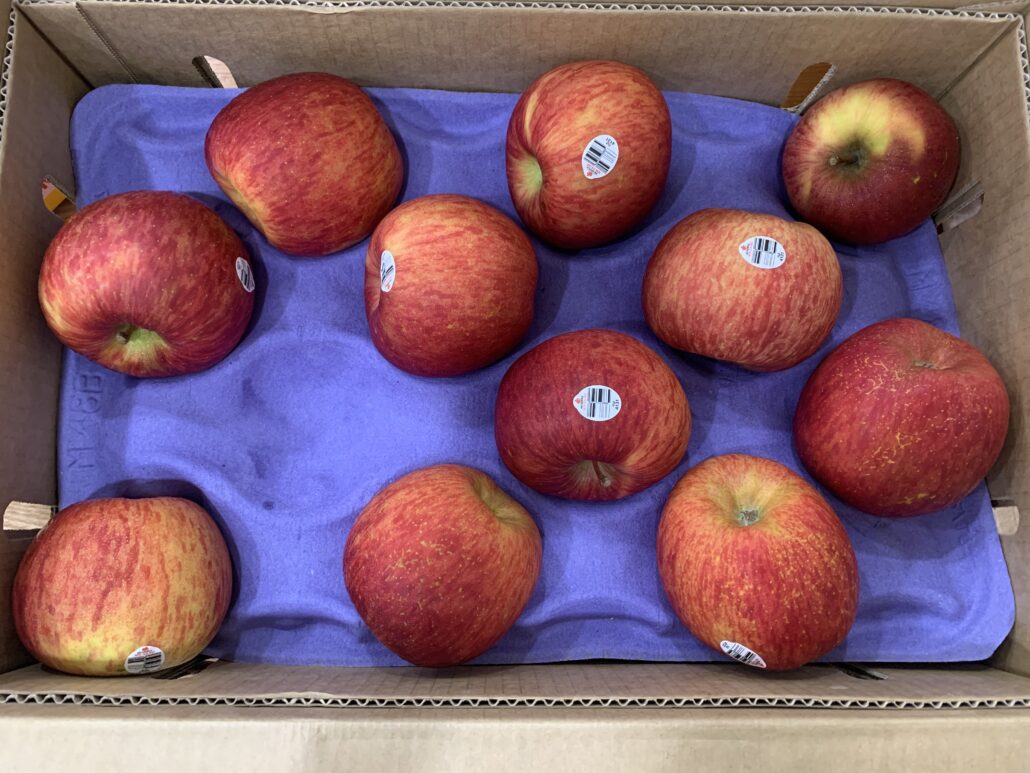
Record variety, agreed size and grade, maturity, harvest or cold-store entry dates where available, packaging and quality-manager handling instructions. Net fruit weight differs from gross carton and pallet weight. The sales sample must relate to the actual delivery lot, rather than merely being an attractive orchard photograph.
Each lot should be traceable to its orchard or supplier and packer, with linked identifiers on documents and pallets. Agree counting and quality-assessment arrangements with the receiver in advance. This is an operational traceability recommendation, not a substitute for legal certification or product testing.
For related packing and shipment-planning guidance, see: Kiwi freight · Freight documents · Choosing a transport mode
5. Design cartons, ventilation and pallets together
FAO’s guide highlights airflow through both individual packages and the stack. Fresh-produce packing guidance. Ask the packer for an approved arrangement specifying layers, package weight, fruit protection and airflow. Do not change it by adding wrap or tighter stacking without review.
Set aside wet or crushed cartons and defective crates for the quality officer’s decision before loading. Establish pallet strength, package alignment and securing. Ask the entry specialist about wooden-packaging requirements too. A sound-looking pallet does not itself demonstrate regulatory compliance.
Send final pallet photographs, dimensions, weights, stackability and handling instructions for transport assessment. A reliable quotation depends on actual cargo specifications.
Select the quick shipment request option in the portal. Phone verification is required to continue.
6. Cold chain: no single setting for every variety
The producer or quality specialist should set target temperature and humidity, handover conditions and acceptable limits for the variety, maturity and journey. This page recommends no universal temperature. Define who prepares the cargo, where conditions are recorded and who decides what to do if readings differ from the specification.
Confirm equipment feasibility and recording arrangements before booking. A vehicle display setting alone does not establish the condition of every apple. Include product preparation and the interval between leaving storage and loading in the plan. Refrigerated capacity or special services are not guaranteed without assessment.
7. Prepare the file before departure; release remains an official decision
A pre-departure review is not advance customs release. Reconcile invoice, packing list, specifications and approved documents among the parties before movement. Plan access for possible checks or sampling. Record and manage pallet opening or seal changes only through authorised procedures.
Obtain the receiver’s hours, unloading location, storage facilities and responsible contact. Arrival outside working hours can disrupt a sensitive-product plan. Estimates should include waiting and checks. Do not promise an unconditional date without reviewing the border situation, paperwork and receiver’s schedule.
8. Hypothetical scenario: the truck arrives but the receiver is not ready
Suppose departure goes to plan, but the unloading appointment does not match warehouse hours. This is an educational example, not a claimed customer experience. The practical response is an available contact, an authorised waiting location, arrangements to preserve agreed conditions and a decision-maker for costs and rescheduling, rather than leaving the driver to resolve everything.
Quick questions
Are Iranian apples currently admissible? Not confirmed for a specific consignment in this research; obtain official confirmation before dispatch. Can LTL work? Only if conditions, handling and service timing are compatible and confirmed. Does insurance cover every quality loss? Review the cover and exclusions. Is the cheapest freight best? Compare scope and waiting risks alongside price.
Where can Asadi Express help?
Requests are assessed for transport coordination, loading information and delivery planning. Available services, equipment and responsibilities will be defined in the quotation. A transport company cannot guarantee quarantine acceptance, product safety or clearance time. Operational booking should follow clarification of legal and technical conditions.
Register cargo information and approval-review status for an Iran-to-Turkey transport assessment. Commercial freight contact: Artin, +90 538 396 3200.
Select the quick shipment request option in the portal. Phone verification is required to continue.
Related: Iran-to-Turkey commercial freight and trade and documents guide. Sources reviewed: 15 November 2026. FAO is older technical guidance, not current law. Bilateral admission of Iranian apples, tariff treatment and current Iranian export status were not confirmed.
Routes


