









14 November 2026; this guide does not replace a current product-specific import and tariff review.
Identify the material precisely
Filament yarn, spun yarn and staple fibres are not interchangeable descriptions. Record fibre percentages, yarn count or fibre fineness, staple length, twist, ply, colour, finish and intended use as applicable. “Polyester” alone is inadequate for a reliable order or declaration. Retain a sample that performs acceptably in your production process as the order reference.
Check eligibility before paying
Being a raw material does not establish free importation. The importer must verify the Iranian eight-digit classification, registration, currency conditions and applicable approvals for the actual specification and transaction date. Yarn and unspun fibres may fall under different classifications. This article is not a live Iranian-system clearance query and makes no universal duty or admissibility promise.
Make quality measurable
For yarn, agree relevant uniformity, strength, knot and shade criteria; for fibres, length, fineness and processing state matter. Ask for dye-lot references and the availability of repeat supply. Do not accept mixed batches without your production team’s approval. A supplier’s test certificate is useful evidence, not a substitute for validating a sample in the intended application.
Reconcile commercial documents with the load
Show product and batch references, carton or bale counts, net material weight and gross packed weight separately. Do not confuse cone, bag or pallet weight with saleable fibre weight. Assign responsibility for origin, transport and any required test or approval documents before loading. Buying in Türkiye does not necessarily mean manufacturing origin is Türkiye.
Protect the shipment during handling
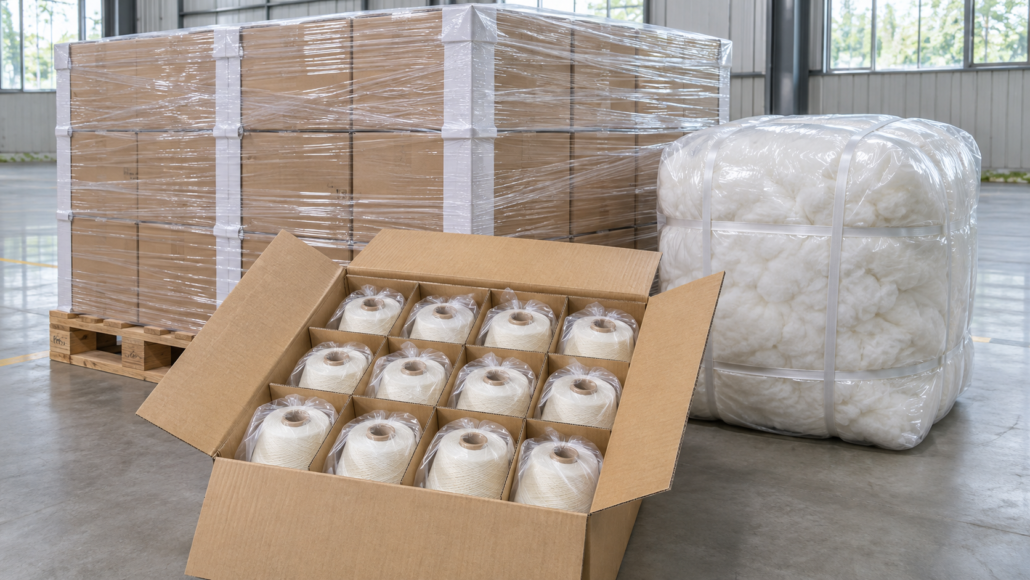
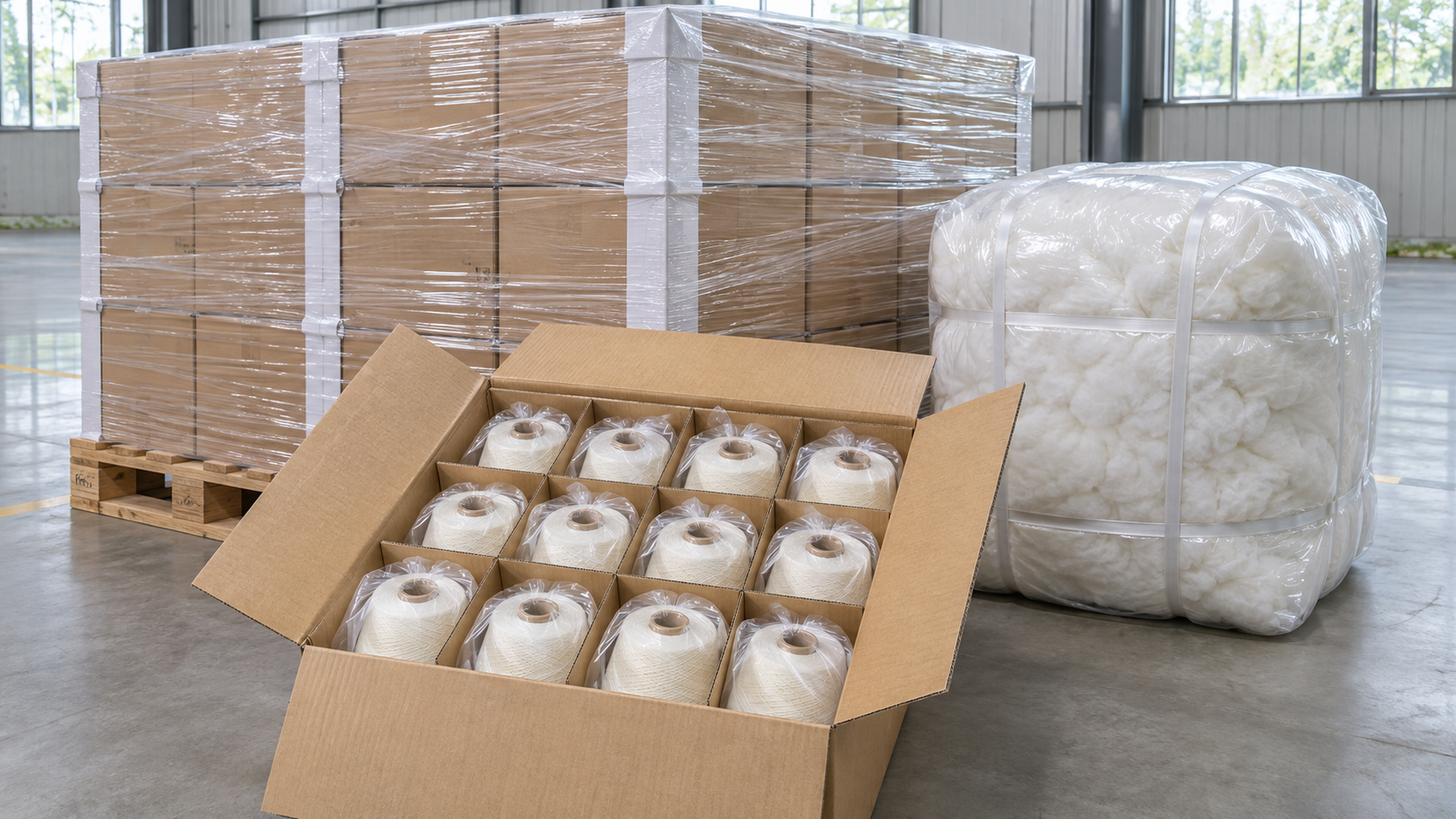
Yarn cones need appropriate crush protection, legible identification and protection from contamination. Inspect fibre-bale wrapping and straps; damaged straps or opened bales require attention before dispatch. Consider moisture, odour and compatibility with accompanying cargo. Manufacturer storage instructions take priority over generic assumptions about humidity and temperature.
Choose freight on packed dimensions and total cost
Compare groupage and full loads using actual packed weight, volume, locations and supply timing. In groupage, assess additional handling alongside potential savings. Request separate collection, packing, freight, agreed insurance and customs-related charges. Purchase price per kilogram and freight price per kilogram may refer to different weight bases.
Questions and quotation checklist
Do yarn and fibres share a code? Not necessarily; specify product and presentation. Can purchases from several suppliers be combined? Subject to cargo acceptance and separate traceable documentation. Send Asadi Express specifications, package count, net/gross weight, dimensions, photographs and readiness date through the quick-shipment portal or quotation form.
Related guides
Related Iran–Türkiye guide (Persian)
Related Iran–Türkiye guide (Persian)
Sources and review date
Türkiye Ministry of Trade — Iran import and foreign exchange framework
World Customs Organization — HS FAQ
International Trade Administration — Common Export Documents
Türkiye Ministry of Trade — Origin of goods
Related cargo guides
Buying and shipping industrial machinery from Türkiye to Iran
Buying and shipping machinery spare parts from Türkiye to Iran
Shipping Plastic Raw Materials and Masterbatch from Türkiye to Iran
Buying and Shipping Fabric from Türkiye to Iran
Shipping Paper, Paperboard and Packaging from Türkiye to Iran
Routes


