
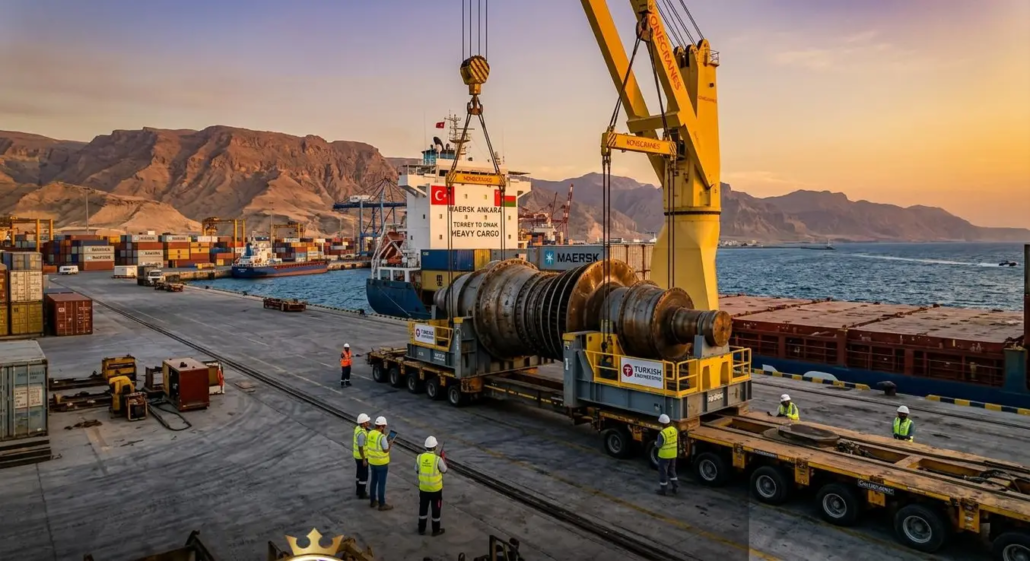
Industrial Cargo: Turkey to Muscat Shipping
Industrial Cargo: Turkey to Muscat Shipping
The global industrial sector relies heavily on efficient supply chains that bridge continents and connect emerging markets. One of the most critical corridors in the contemporary trade landscape is the route between the manufacturing hubs of Eurasia and the developing infrastructure of the Arabian Peninsula. Specifically, Industrial Cargo: Turkey to Muscat Shipping has become a cornerstone for businesses involved in construction, energy, and heavy manufacturing. As Turkey continues to position itself as a premier industrial exporter, the demand for sophisticated logistics solutions reaching the Omani capital of Muscat has surged. This trade lane requires a deep understanding of multi-modal transport, customs compliance across several borders, and the specialized handling of oversized or sensitive machinery.
Managing the flow of Industrial Cargo: Turkey to Muscat Shipping involves navigating a complex web of logistics networks that span from the industrial zones of Istanbul to the port of Sultan Qaboos or Sohar. For companies operating in this space, the objective is always the same: minimize transit times while maximizing safety and cost-efficiency. Whether it is shipping raw materials for the Omani oil and gas industry or transporting heavy machinery for new urban developments in Muscat, the logistical precision required cannot be overstated. By utilizing the latest in tracking technology and strategic partnerships, modern freight forwarders are transforming how industrial goods move across this transcontinental bridge.
The Logistics Landscape of Turkey to Muscat Shipping
Turkey’s geographical position as a gateway between Europe and Asia makes it a natural starting point for large-scale industrial exports. When we look at a logistics company in Istanbul, we see a hub of activity where goods from all over the country are consolidated before beginning their long journey south. The process of moving industrial cargo begins with a thorough assessment of the shipment’s dimensions, weight, and urgency. Because industrial goods often include heavy-duty equipment or hazardous materials, the planning phase is much more rigorous than standard retail shipping.
In Muscat, the demand for these goods is driven by Oman’s Vision 2040, an ambitious plan to diversify the economy and upgrade national infrastructure. This has created a massive need for cargo services Muscat Oman that can handle high volumes of industrial components. The transit from Turkey to Oman typically involves passing through or near major regional logistics hubs, such as those in Dubai, Abu Dhabi, or Sharjah. Integrating these routes into a cohesive strategy allows for smoother transitions and provides alternative routing options in case of regional delays. Furthermore, the coordination of Industrial Cargo: Turkey to Muscat Shipping often requires collaboration with regional experts who understand the nuances of Middle Eastern maritime and land corridors.
Transport Modes for Industrial Machinery and Materials
Selecting the right transport mode is the most critical decision in industrial logistics. For many businesses, the default for heavy machinery is sea freight due to its capacity for large volumes and heavy weights. By leveraging high-capacity ocean shipping, exporters can move massive containerized loads or breakbulk cargo from Turkish ports like Ambarlı or Mersin directly to Omani shores. This method is cost-effective for long-term projects where transit times of two to three weeks are acceptable.
However, when time is of the essence—such as when a critical spare part is needed to prevent a factory shutdown in Muscat—the speed of air transport is unrivaled. Utilizing professional air freight services ensures that even the most remote industrial sites can receive equipment within days. While more expensive, the reduction in downtime often justifies the cost. For shipments moving within the Middle Eastern region, such as cargo from Tehran to Dubai or shipping from Shiraz to UAE, air freight often acts as the primary link for high-value industrial components. In the context of Turkey and Oman, a hybrid approach combining air and sea is frequently employed to balance speed and budget.
Land transport remains another viable option, particularly for shipments that can be moved via truck through the Levant and the Arabian Peninsula. While geopolitical factors can influence these routes, cross-border land transport offers a flexible alternative that avoids the congestion of major seaports. This mode is particularly useful for door to door cargo UAE and Oman, providing a seamless link from the manufacturer’s door in Turkey to the final industrial site in Muscat. Asadi Express Cargo provides comprehensive solutions that encompass all these modes, ensuring that every industrial requirement is met with a tailored logistics plan.
Key Challenges in Middle East Logistics Solutions
Shipping industrial goods through the Middle East presents a unique set of challenges that require experienced handling. One of the primary hurdles is the complex regulatory environment. Each country along the route, from Turkey through Iraq or Iran and into the GCC, has its own set of customs requirements. Navigating these requires a shipping company in Dubai or Istanbul that has local expertise and a robust network of agents. For example, ensuring that all documentation for freight forwarding UAE is in order is essential to prevent costly delays at the border of the Emirates before the goods proceed to Oman.
Environmental factors also play a significant role. The extreme heat of the Arabian Peninsula can affect sensitive industrial materials or electronic components. Specialized storage and temperature-controlled transport may be necessary for certain types of industrial cargo. Additionally, the sheer size of industrial equipment often requires special permits for road transport in cities like Muscat, Dubai, or Abu Dhabi. Managing these “over-dimensional” loads requires precise timing and coordination with local authorities to ensure safe passage through urban and desert environments alike.
Specialized Handling for Industrial Goods
Industrial cargo is rarely “one size fits all.” It often involves “Project Cargo,” which includes items that are too big or too heavy to fit in standard containers. This might include wind turbine blades, large-scale generators, or massive structural steel beams. Handling these items during Industrial Cargo: Turkey to Muscat Shipping requires specialized cranes, heavy-lift vessels, and reinforced trailers. Choosing a partner like Asadi Express Cargo ensures that the technical specifications of the cargo are matched with the appropriate equipment and expertise.
Safety is the paramount concern when dealing with such high-value and potentially dangerous goods. Rigorous lashing, securing, and packing procedures are mandatory to prevent shifting during transit. Furthermore, the integration of air freight and sea freight UAE and Oman allows for a versatile approach to cargo safety. For instance, sensitive control panels might be sent via air to avoid the vibrations of a long sea voyage, while the heavy chassis moves by ship. This holistic view of the shipping process is what distinguishes top-tier cargo services in Dubai and Muscat from standard logistics providers.
Connecting the Region: Turkey, UAE, and Oman
The synergy between Turkey and the GCC nations is strengthened by the interconnected nature of their logistics hubs. Often, shipments destined for Muscat will transit through the United Arab Emirates. The ports of Jebel Ali in Dubai and Khalifa Port in Abu Dhabi serve as massive redistribution centers where Industrial Cargo: Turkey to Muscat Shipping can be consolidated with other regional goods. This “hub and spoke” model is highly efficient, allowing for more frequent departures and competitive pricing.
Furthermore, the logistics corridor often involves significant transit through Iran, given its geographical position. Expertise in handling cargo from Tehran to Dubai or shipping from Shiraz to UAE is often a prerequisite for companies managing the broader Turkey-to-Oman route. By understanding the regional flow of goods, a logistics from Turkey to the GCC specialist can navigate the fastest and most secure paths available. This regional connectivity ensures that Muscat is not just a destination, but a well-integrated part of a global industrial supply chain. Asadi Express Cargo maintains a reliable logistics partner status by bridging these geographical gaps with a seamless service network.
Real-World Use Cases in Industrial Shipping
To understand the impact of effective logistics, we can look at several real-world scenarios. In the business sector, a Turkish manufacturer of industrial chillers may need to supply a new hospital project in Muscat. This requires a door to door cargo UAE and Oman service that handles everything from the factory floor in Izmir to the installation site in Muscat, including the critical transit through Dubai’s logistics free zones. The ability to track this shipment in real-time gives the project managers in Oman the peace of mind needed to schedule their construction phases accurately.
Another use case involves e-commerce for industrial parts. As B2B e-commerce grows, smaller industrial firms in Oman are increasingly ordering specialized tools and components directly from Turkish suppliers. These smaller, but no less critical, shipments rely on a global shipping network that can handle small-parcel industrial delivery with the same care as a multi-ton generator. Whether it is a large-scale energy project or a small manufacturing startup, the efficiency of Industrial Cargo: Turkey to Muscat Shipping is a vital engine of economic growth. By utilizing professional cargo services in Dubai and the wider region, these businesses can compete on a global scale.
Safety and Compliance in Industrial Logistics
Compliance is not just about paperwork; it is about ensuring that every piece of cargo meets the safety standards of the countries it passes through. For industrial goods, this includes adhering to international maritime dangerous goods (IMDG) codes and local transport regulations in Turkey and Oman. A failure in compliance can lead to seized shipments or heavy fines, which can derail an industrial project. Top-tier providers ensure that every aspect of the Industrial Cargo: Turkey to Muscat Shipping process is fully insured and documented, providing a layer of security that is essential for high-stakes industrial operations.
Technological Integration in Shipping
The modern era of logistics is defined by data. From GPS tracking of trucks moving across the desert to automated container handling at the Port of Sohar, technology has made Industrial Cargo: Turkey to Muscat Shipping more transparent than ever. Logistics providers now use sophisticated software to predict weather patterns, optimize fuel consumption, and provide clients with exact arrival times. This level of detail is particularly important for industrial cargo, where the arrival of a single component can be the “linchpin” for a multi-million dollar operation.
Frequently Asked Questions
1. How long does it take for industrial cargo to travel from Turkey to Muscat?
The transit time depends on the mode of transport. Sea freight typically takes between 18 to 25 days depending on the port of origin and the number of transshipment stops. Air freight is much faster, usually taking 3 to 7 days, including customs clearance. Land transport via regional corridors can take approximately 10 to 15 days.
2. What documents are required for shipping industrial goods to Oman?
Generally, you will need a commercial invoice, a packing list, a certificate of origin, and a bill of lading or airway bill. For industrial cargo, additional documents such as technical data sheets, insurance certificates, and special import permits from the Omani Ministry of Commerce and Industry may be required.
3. Can you handle “Out of Gauge” (OOG) industrial cargo?
Yes, specialized logistics providers are equipped to handle OOG cargo that does not fit in standard 20ft or 40ft containers. This involves using flat racks, open-top containers, or breakbulk shipping methods, along with specialized cranes and trailers for the inland portions of the journey.
4. Does the shipping route pass through the UAE?
While direct sea routes exist, many industrial shipments from Turkey to Muscat transit through major UAE ports like Jebel Ali in Dubai. This is often more cost-effective and allows for easier consolidation and distribution within the GCC region.
5. Is insurance mandatory for industrial cargo?
While not always legally mandatory, it is highly recommended. Industrial cargo is high-value, and the risks of transit—though minimized by professional handling—cannot be entirely eliminated. Comprehensive marine or air cargo insurance protects your investment against unforeseen events.
Conclusion: Streamlining Your Industrial Supply Chain
In the fast-paced world of global trade, the ability to move heavy machinery and industrial materials across borders efficiently is a significant competitive advantage. Industrial Cargo: Turkey to Muscat Shipping represents a vital link between two growing economic regions, requiring a sophisticated blend of local knowledge, technical expertise, and global reach. From the bustling industrial centers of Istanbul to the growing ports of Muscat and Sohar, every step of the journey must be managed with precision. By partnering with a logistics expert that understands the intricacies of the Middle Eastern market—from the customs of Sharjah to the transit routes of Dubai and Abu Dhabi—businesses can ensure their projects stay on track and within budget.
Whether you are looking for door to door cargo UAE services or a comprehensive freight forwarding UAE strategy, the goal remains the same: reliable, safe, and efficient transport. As the industrial ties between Turkey and Oman continue to strengthen, the role of expert logistics will only become more prominent. Ready to optimize your industrial shipping? Contact us today to receive a tailored quote and discover how our specialized cargo services can support your business goals across the Middle East and beyond. Let us handle the complexities of your next shipment, ensuring your industrial cargo reaches Muscat safely and on time.

Leave a Reply
Want to join the discussion?Feel free to contribute!